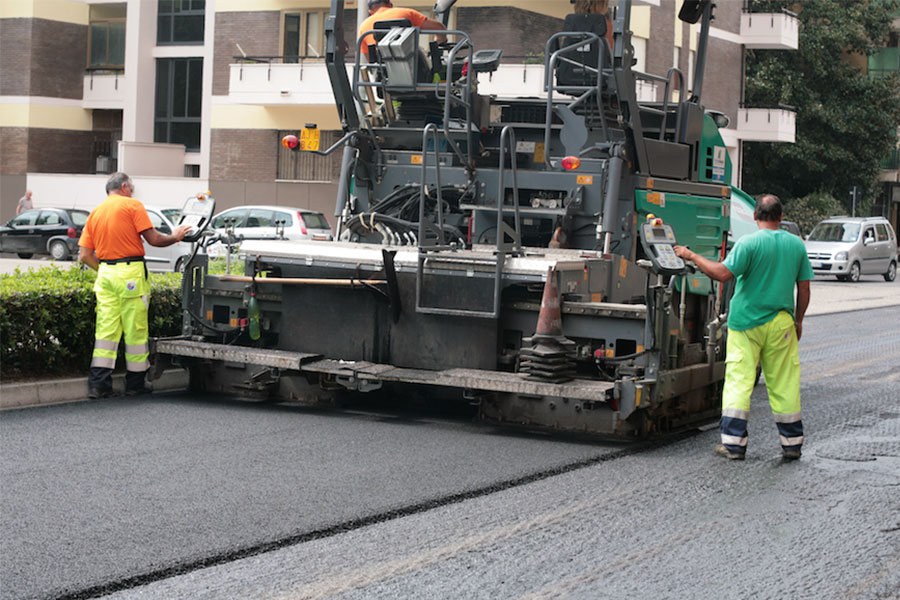
The most up-to-date eco-sustainable technologies available to have roads that are less noisy, more durable, more resistant to instability, with excellent grip and water drainage, thanks also to the use of recycled rubber powder from end-of-life tyres. This is what will be addressed during the seminar "High performance and low environmental impact flooring", organized by the Civil Engineering degree course of the University of the Republic of San Marino together with the Autonomous State Company for Public Works (AASLP) and Ecopneus, a non-profit company that manages the collection, transport and treatment of around 220.000 tons of end-of-life tires every year. Among its purposes, which include the promotion and support of recycled rubber applications, the contribution to the use of road surfaces capable of providing high-level mechanical performance with positive effects for the community in terms of noise reduction and environmental sustainability, thanks precisely to the use of recycled materials.
The meeting, scheduled for Thursday 18 April at 8:30 in the Sala Montelupo of Domagnano, sees among the main objectives the creation of a network for the exchange of knowledge and experience between the various players in the road sector supply chain, with a work to raise awareness on the use of innovative technologies and materials.
"Participants will be offered an overview of the techniques available on the Italian market to combine high performance, sound absorption and the use of materials with high environmental value", explains Andrea Grilli, professor at the University of San Marino. “Hosting this event is a recognition that projects San Marino at a national level in this sector. Thanks to the activity of the University and the Autonomous State Company for Public Works, the Titano becomes a territorial point of reference in the field of road engineering. A series of collaborations has contributed to this which involves us together with the administrative realities of Rimini, Fano, Senigallia, Riccione and beyond".
The initiative is sponsored by the Secretariat of State for the Territory, the Environment and Tourism, and by the Secretariat of State for Education and Culture.