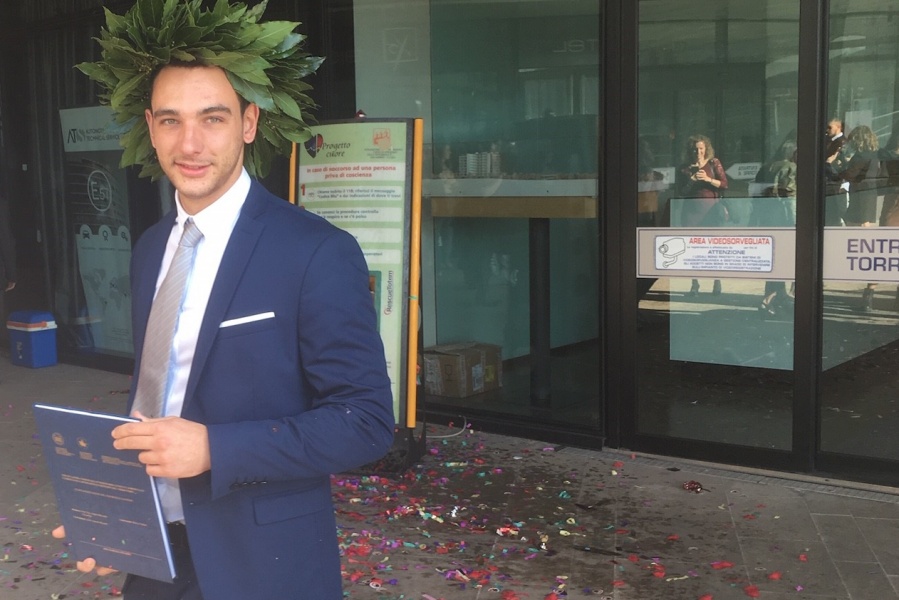
A method for developing a plan to eliminate architectural barriers from public buildings in San Marino and an assessment of the energy consumption of public administration facilities in the San Marino area. These are the contents of the two theses with which Riccardo Gasperoni and Thomas Bagnolini earned their bachelor's degrees in Civil and Environmental Engineering from the University of the Republic of San Marino last Monday, October 21st.
Specifically, Gasperoni developed a method for assessing accessibility and drafting a multi-year plan of interventions to facilitate access for people with disabilities to public facilities, thus capitalizing on an internship at the Autonomous State Agency for Public Works. Bagnolini was involved in a series of analyses involving a census of public administration buildings in terms of energy performance parameters.
During Monday's session, held at the University's World Trade Center campus in Dogana, the first thesis for the three-year degree program in Construction and Land Management, designed for surveyors and launched in 2016, was also discussed. Enrico Fattori proposed a method for standardizing construction site supervision, a key issue in the construction of buildings and infrastructure projects. "The proposed projects and the work completed," explains Angelo Marcello Tarantino, director of the degree programs, "demonstrate the strong and ever-growing ties between the University of San Marino, the local community, and the world of work."