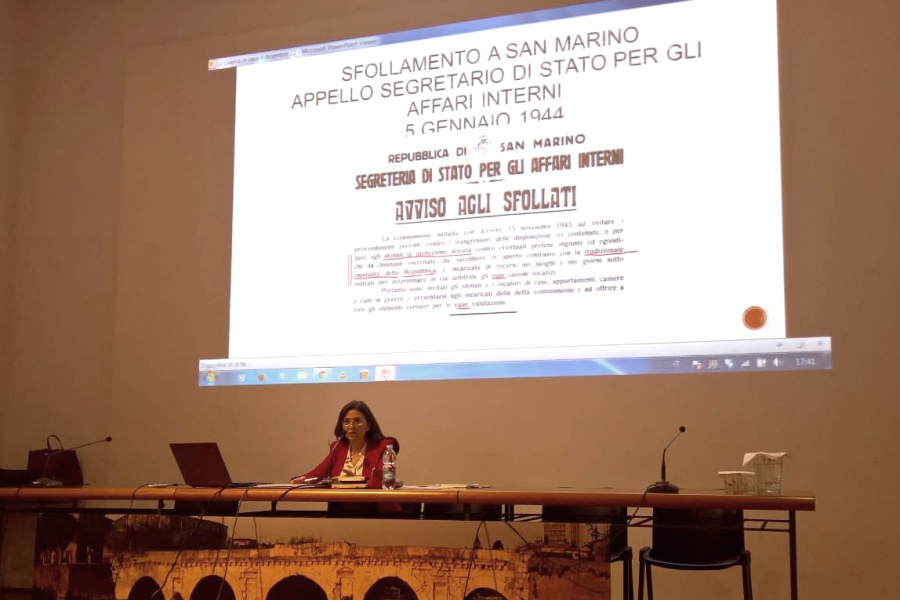
Documents, photographs, autobiographical memoirs, and audiovisual testimonies accompany an analysis of the displacement of thousands of Rimini residents who took refuge on Mount Titano starting in September 1943, during the Second World War. This was presented last Thursday, December 5th, by Patrizia Di Luca, head of the Emigration Research Center at the University of the Republic of San Marino, as part of the initiative "Mente locale – il prezzo della guerra a Rimini 1943-1944," a training course primarily aimed at teachers and held at the City Museum.
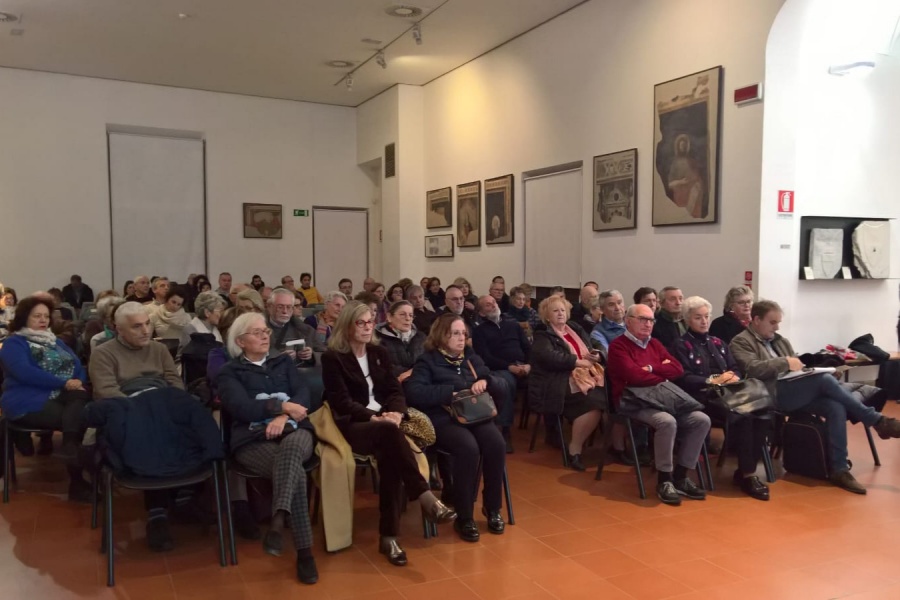
Before an audience of approximately 150 people, Di Luca described, among other things, the use of the railway tunnels as shelters, also highlighting the presence in San Marino of figures such as future film director Federico Fellini: "The meeting was an opportunity to share some insights from an ongoing study by our Research Center and to retrace the history of the welcome offered by the Republic to those fleeing the bombings and violence of war, demonstrating the generosity of the San Marino authorities and the civil community of the Titan," Di Luca explained. "The Republic's authorities," he continued, "attempted to manage a very serious emergency, and the people of San Marino opened the doors of their homes. The history of that period is an example that it is important to engage with in order to remain consistent with the values concretely affirmed by the generations that preceded us."
The meeting was organized by the Municipality of Rimini and the City Museum. It was held in collaboration with organizations and institutions such as the Rimini Provincial School Office, the Gambalunga Library, and the Institute for the History of the Resistance and Contemporary Italy of the Province of Rimini.