


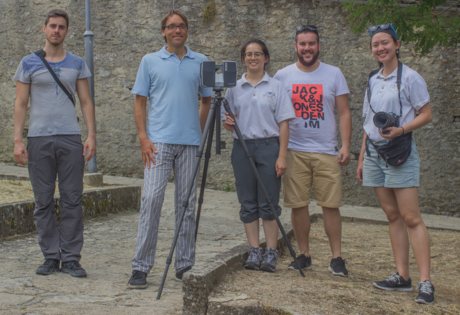
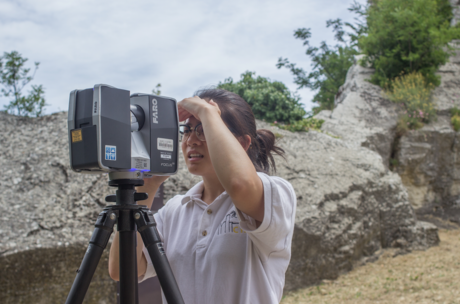
A 3D survey of the buildings in the historic center of San Marino, the first of its kind, is currently being created thanks to a collaboration between the University of the Republic of San Marino and the University of California, San Diego. From July 11th to 17th, technical operations are scheduled to allow for a complete 'virtual journey' of the area that became a UNESCO World Heritage Site in 2008, with the possibility of visiting the interior of monuments such as the Three Towers, Palazzo Pubblico, and the Basilica del Santo. The project is curated by a team of academics including San Marino native Davide Forcellini, professor of the Master's Degree in Civil Engineering at the University of San Marino, and Falko Kuester, director of the Center of Interdisciplinary Science for Art, Architecture and Archeology at the University of California, San Diego. Joining them are four researchers from the Californian academic institution and three students from the University of San Diego, including a student who will be studying in San Diego for his thesis in the coming months. The initiative, which applies new technologies to the conservation of historic buildings, is made possible thanks to a phase of external filming, taken with two drones, and internal surveys, made possible thanks to laser instruments. The surveys will allow for a virtual journey that lends itself to a wide range of uses: in addition to the ability to verify the state of conservation of the buildings involved with an assessment of their seismic stability, the necessary content will be available to develop online tools and give users the opportunity to visit the historic center of San Marino via computer. This goal involves the tourism sector and extends to the possibility of providing access, even if not physical, to people with disabilities who are currently unable to visit difficult-to-reach areas, such as, for example, the highest point of the Second Tower. The surveys represent the first initiative of this kind ever carried out in the Italian peninsula. The only precedent, carried out by the University of California at San Diego, concerns the Palazzo della Signoria in Florence, which however represents a single structure and not a collection of buildings like the UNESCO site of Mount Titan. “The project was born from an idea of mine and Professor Kuester,” explains Forcellini, “who immediately became passionate about the San Marino reality. In organizing this project, I was able to truly appreciate the potential of our 'small' dimension, immediately finding support from the institutions that sponsored the initiative. San Marino was also 'great', however, because everyone I contacted was willing to help me carry out the project. I am convinced that this is an opportunity to represent our Sammarinese essence to the world." The initiative is possible thanks to the agreement between the University of San Marino and the University of San Marino, as well as the patronage of the Secretariats of State for Territory and Culture, the Cultural Institutes, and the National UNESCO Commission. On Sunday, July 17, at 17:30 pm, a final workshop on the reliefs, open to the public, will be held at Palazzo Graziani.