A comprehensive analysis that explores and delves into the work of Gino Zani, the San Marino engineer who oversaw projects such as the Cassa di Risparmio headquarters and the Teatro Titano, as well as several buildings in Reggio Calabria, including the Palazzo della Prefettura and the Chamber of Commerce. This was presented on Friday, January 25, to Captains Regent Mirco Tomassoni and Luca Santolini during an audience in which the heads of state met with a delegation of academics, professionals, and institutional representatives to discover the volume that the "Quaderni" series of the Sammarinese Center for Historical Studies, edited by the Department of History, Culture, and History of San Marino at the University of the Republic of San Marino, has dedicated to this figure, who passed away in 1964.
Edited by architect Luca Morganti, the text features contributions from several authors and includes a monographic section featuring profiles of some projects.
"The book, entitled 'Gino Zani – the Engineer, the Architect, the Historian,' represents the culmination of a series of events presented since late 2014 to commemorate the fiftieth anniversary of his passing," explains Morganti. "The publication offers a synthesis of all the materials presented over the years, ensuring they endure as a testament to a collective research effort. But it goes further: starting with an analysis of Zani's work, his career has been explored, for the first time, in its entirety, without the traditional division between an initial phase in Reggio Calabria and a second in San Marino. The aim is to convey the complexity of an artist who lived through the 'short century' at crucial moments in the history of the present."
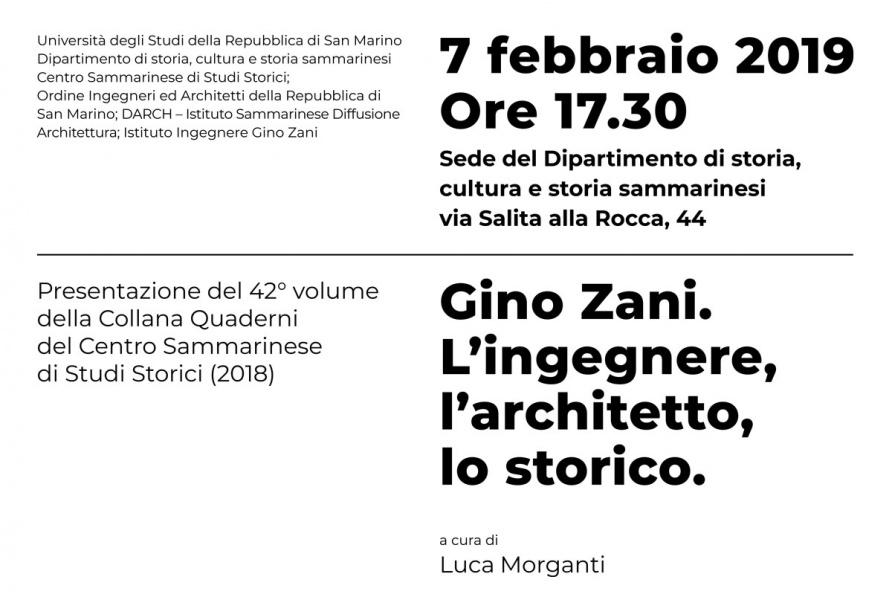
The text will be presented to the public at 17:30 PM on Thursday, February 7, at the Department of History, Culture, and San Marino History, located at Via Salita alla Rocca 44, in the historic center of San Marino. Speakers will include historian and professor of Medieval History Tommaso Falconieri of the University of Urbino and Tullia Iori, professor of Technical Architecture at the University of Tor Vergata.