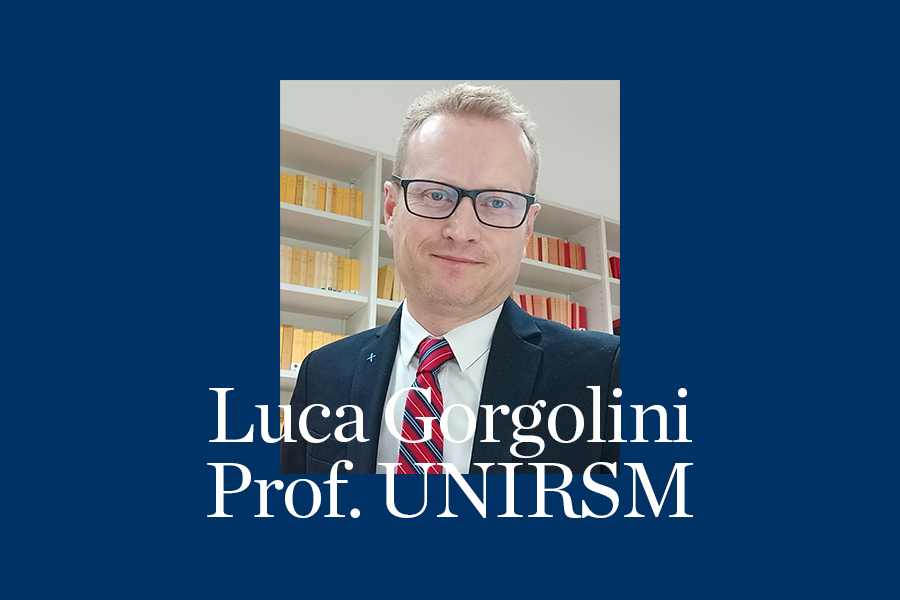
Can social media become a weapon? The answer, yes, comes from the new book by Luca Gorgolini, a professor at the University of the Republic, which collects the presentations from a 2021 conference hosted in the Aula Magna of the University of San Marino. The conference brought together academics, historians, and information professionals to offer a series of analyses on the origins and effects of fake news at various levels, from the military to the health sector, including its impact on younger generations and possible strategies to counter the phenomenon.
In this context, the so-called "weaponization of social media" is a process that has affected episodes such as the Russian disinformation campaign launched in the mid-2000s in Ukraine. The country currently under attack had in fact "become, between late 2013 and early 2014, the Russian government's testing ground for the effects of information warfare waged via the internet and, in particular, the emerging power of social media as a tool capable of influencing events in the physical realm." The Internet Research Agency, a St. Petersburg-based company "apparently independent but in reality controlled by oligarchs identified as very close to Putin," Gorgolini notes, had and has within it "hundreds of employees who collectively publish thousands of posts every day with the aim of influencing the content of ongoing conversations and spreading lies."
These scenarios offer a further perspective on current events and make the text a concrete contribution to analyzing the present and becoming, in a certain sense, 'critical' users of what circulates on social media: "The conference was aimed at our students, so the styles and language used by the speakers are immediate and direct," explains Gorgolini. "We discuss phenomena such as fact checking, the relationship between young people and disinformation, what can be done in schools to help kids distinguish reliable news from unreliable ones, how the Italian scientific community was forced to react to the spread of fake news during the pandemic, and more. This book helps us understand how we, as users, are influenced by fake news, and how disinformation is used strategically by military, terrorist, and criminal organizations."
Published by Bologna University Press, the volume is titled "Digital Media and Disinformation – Politics, Journalism, Social Networks, and Armed Conflicts." It is available in bookstores and online. The conference was organized by the Department of Human Sciences and the Department of Historical Studies of the University of San Marino.