Is Mount Titan the right place to understand if there are early warning signs, detectable in a cost-effective and non-invasive way, to determine whether a person will develop Alzheimer's disease within three years of testing and thus implement a system that benefits citizens' health?
Since 2016, academics from the University of the Republic of San Marino and doctors from the Institute for Social Security have been working on the answer, with the involvement of the English universities of Reading, Exeter, and Birmingham, coordinated by San Marino researcher Francesco Tamagnini.
Through an analysis of approximately 40 patients treated by the State Hospital's Neurology Department, the group has conducted research over the past six years. This research now begins its second phase with an international conference scheduled for Friday, May 27, in the "Il Monte" hall of the State Hospital. The event, starting at 9:00 a.m. and titled "Bridging the Minds – Clinical and Preclinical Approaches to the Study of Neurodegeneration and Dementia," is organized by the University of San Marino in collaboration with the ISS and under the patronage of the Ministry of Health.
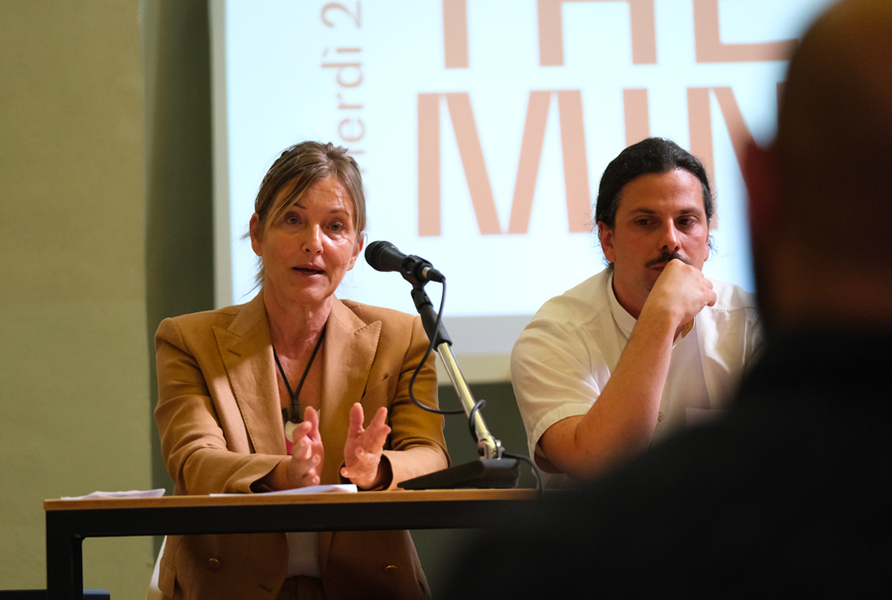
Presented this morning in the Fausta Morganti Aula Magna of the Ancient Monastery of Santa Chiara, the conference aims to explore the possibility of expanding the project by involving more patients and working to move the study from laboratories to outpatient clinics. This would be geared toward the progressive creation of a fully-fledged screening program, very similar to those currently implemented for early cancer diagnosis, through which the public could rely on a non-invasive and cost-effective system, the electroencephalogram. This tool would highlight useful elements to determine whether potential early symptoms, such as brief memory lapses or subtle behavioral changes, could be the first signs of Alzheimer's disease.
"This project began several years ago when a survey of San Marino scholars working abroad highlighted Tamagnini, who was working in England. With him, we initiated a research project that we are pursuing with great results and satisfaction," explained the University's Rector, Corrado Petrocelli. "We chose to support this study, including financially, because it can have positive impacts on the local community and addresses a topic of great significance, not only for people's health, but also for other issues."
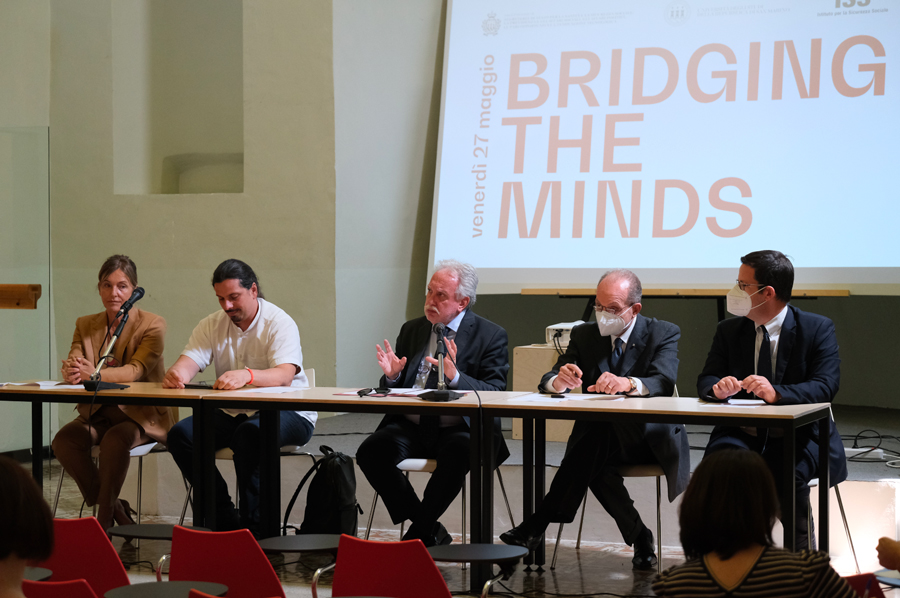
This observation was immediately echoed by Francesco Bevere, Director General of the Institute for Social Security: "San Marino citizens," he stated, "have the right to receive all quality care, preferably locally. This study is important because it leads in this direction and demonstrates the potential for the Institute for Social Security and for San Marino as a country to play a leading role in research and clinical practice. It is essential to continue improving and extending lifespans, but also to live the years gained to the fullest."
In his speech, Tamagnini began by describing the San Marino context: "The fact that San Marino has a small population, with a very high life expectancy and extensive social and healthcare support, has allowed us to do something by no means predictable: create a database around which to base a high-impact project. Being able to quickly identify certain signals," stated the project coordinator, who holds academic positions at the University of Reading in the United Kingdom and the University of San Marino, "can help individuals, families, and communities, as well as assist the country in planning potential medical and social intervention measures."
In this regard, Susanna Guttmann, head of the ISS Neurology Department, highlighted the scale of the phenomenon on Mount Titan: "The conference to be held on Friday is the culmination of a process that began as a small yet significant challenge, uniting and collaborating research and clinical medicine. Today, we know that the incidence of neurodegenerative diseases is high in San Marino as well. The registry we've created at the ISS Neurology Unit already includes over 400 people. This is why early identification of cognitive disorders is crucial. This is precisely what we are achieving with this research project."
"This conference is a unique opportunity to network and deepen our understanding of a disease that the Republic, with its healthcare system and society boasting a very high life expectancy as a distinctive and proud hallmark, cannot fail to address," said Christian Ferrari, representing the Ministry of Health. "I thank the speakers for their enthusiasm in pursuing this research, as well as the University and the ISS for embarking on this collaborative and enriching journey. Networking is a winning approach. This is the valuable lesson learned from the conference and from the work of Guttmann and Tamagnini."