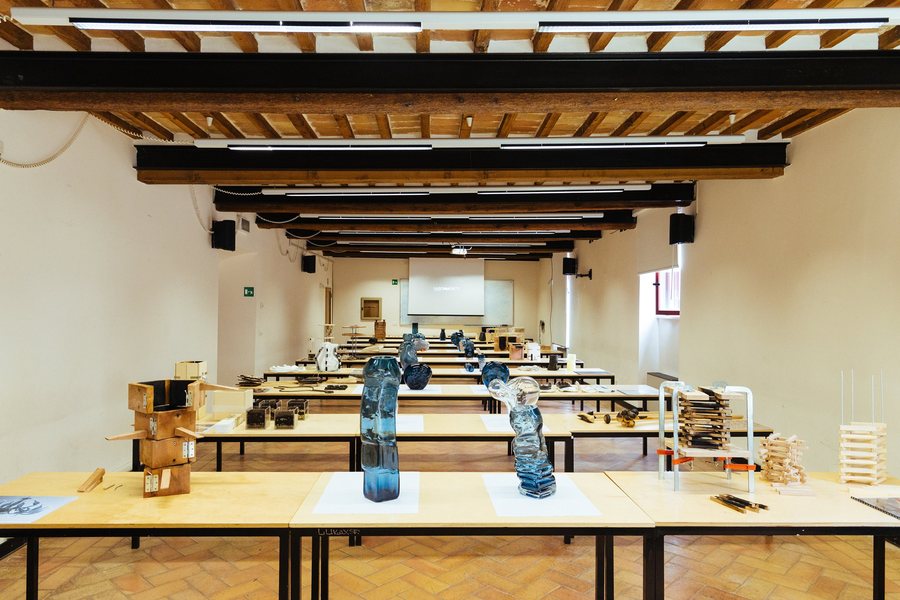
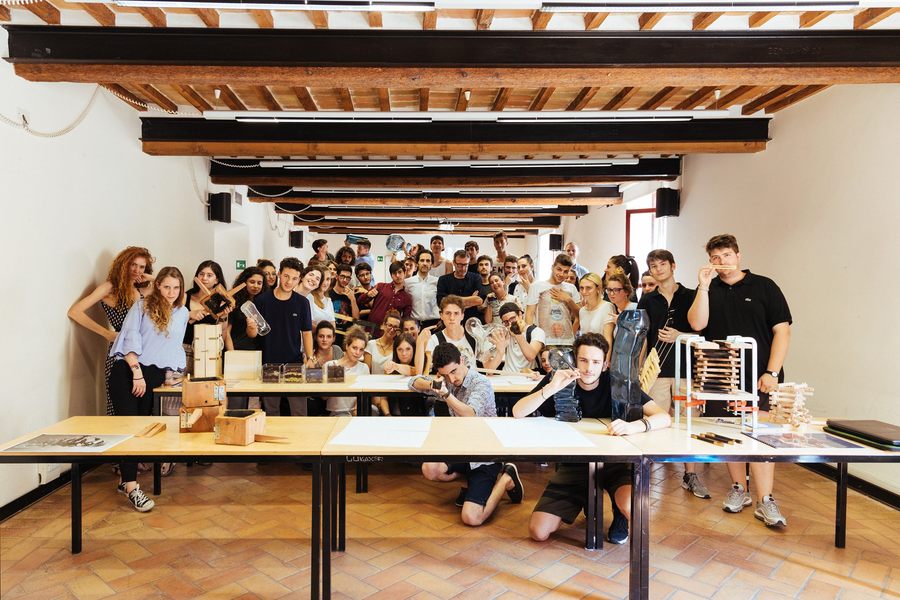
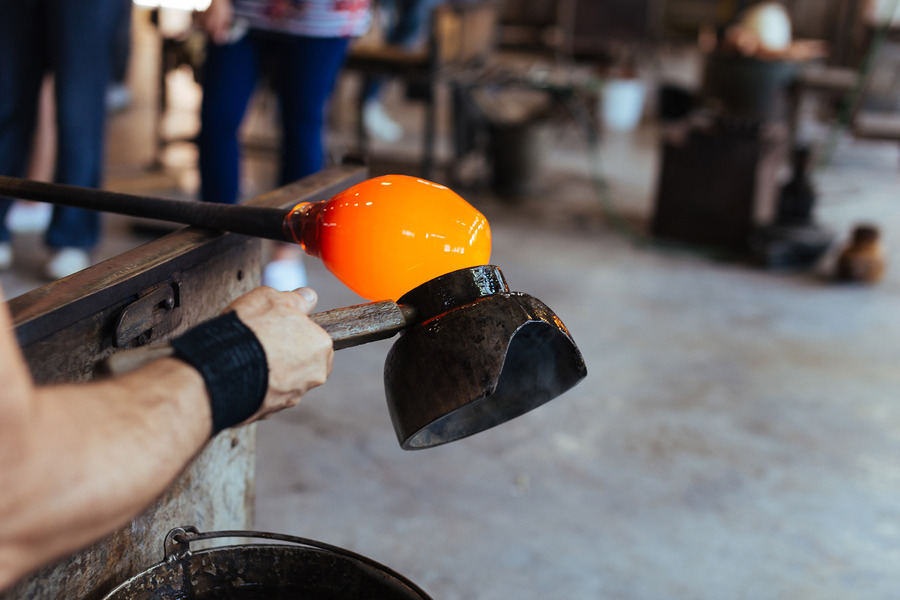
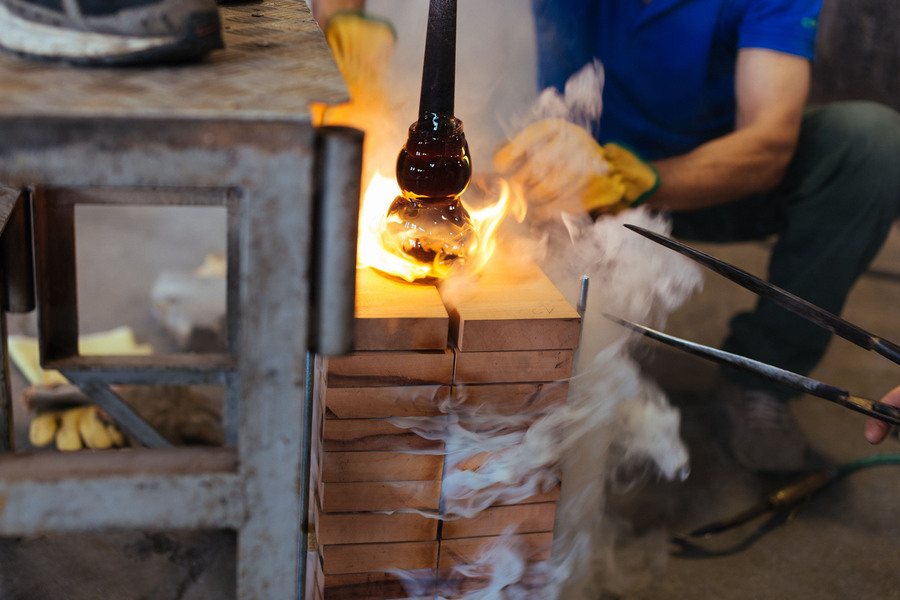
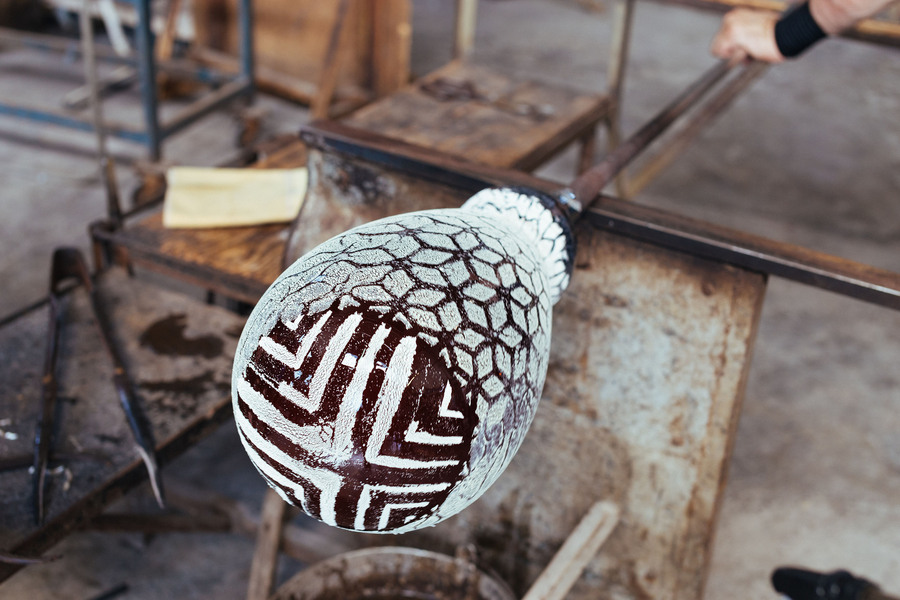
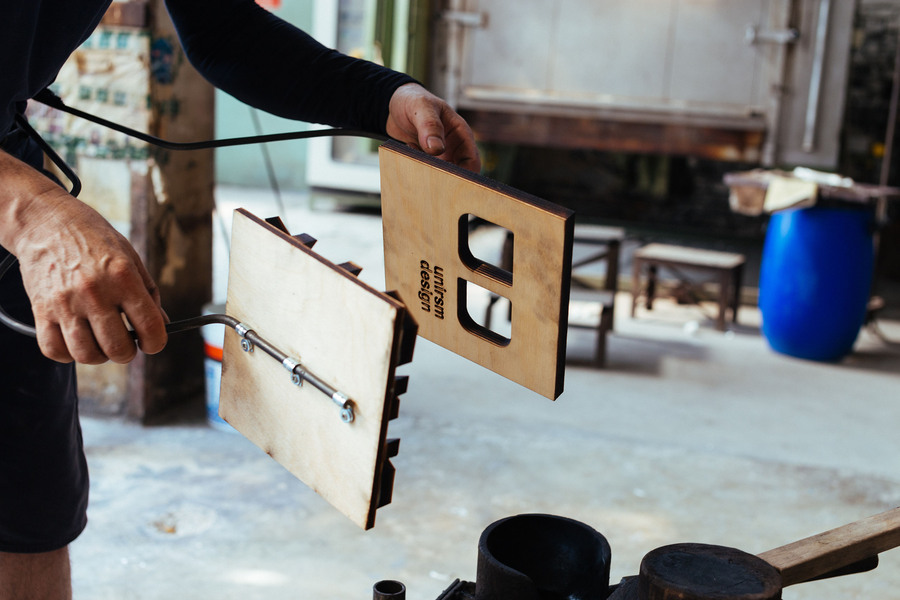
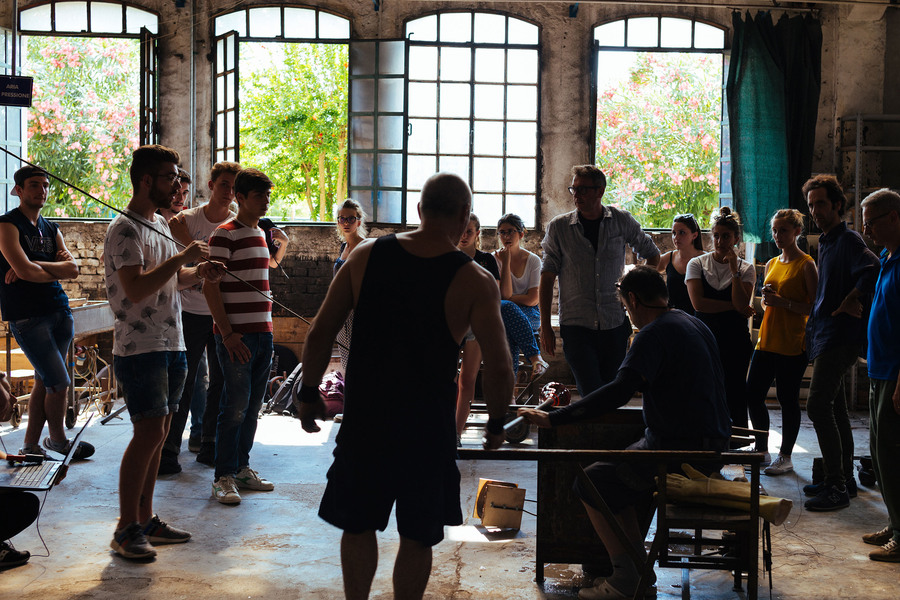
Innovative techniques for blowing artistic Murano glass, opening up new horizons for the sector's craftsmanship. This is the goal uniting the University of the Republic of San Marino and the Murano glassworks Nasonmoretti, which in recent weeks have been involved in a series of tests in which 18 mold prototypes, developed by students from the University of San Marino's undergraduate program in Design, were put to the test by blowing the proposed concepts. The goal: to determine whether the students' ideas can be developed to lead to the introduction of innovative processes for this sector, thus giving new impetus to the craftsmanship of the Venetian artistic district.
The initiative is part of an experimental research project that involved students during the 2016/17 academic year under the guidance of professors Massimo Barbierato and Gaetano Giuliano, who found in Nasonmoretti, a leader in the table and home furnishings sector since the 1950s, the ideal partner to test the performance of the prototypes created during the course 'in the field'.
"Today, the technological gap between the great Bohemian, French, or Scandinavian glassworks is vast and perhaps difficult to bridge," explains Barbierato, analyzing the current state of Murano glassmaking. "In recent years, the glass district has failed to renew itself and has gradually become increasingly fragmented within its own secrets." The need to reduce or eliminate this gap led to the creation of a course in which students were challenged to introduce new technologies and materials, in some cases reusing existing production techniques but applying them to other elements such as metals, clay, fabrics, and wood. The students, the instructor continues, "began to control and direct the material through stems, curves, filaments, and fabrics, using closed, open, modifiable, malleable, and organic molds. As for the materials used to control the glass's shape, earth, sand, silica-based fabrics, ceramics, and fiberglass were used."
NasonMoretti, which has always believed in cross-fertilization and broadening cultural horizons, thus representing a cultural avant-garde capable of capturing influences and crossovers typical of the worlds of art and design, welcomed the project by opening the doors of its company and "bringing to life" the students' design experiments. The results encourage further collaborations which, with appropriate development, could provide the ideal basis for introducing new techniques in Murano artistic glassblowing.